











When a Multifunctional Work Boat reduces fleet operating costs
When a Multifunctional Work Boat Reduces Fleet Operating Costs
For dredging contractors and marine operators, fleet cost control is rarely just a fuel issue. The larger expense often comes from having the wrong vessel available at the wrong time: a dredger waiting for spare parts, a crew transfer delayed by weather, a pipeline repair team needing a tow, or a transport barge making a short trip that consumes a full day of scheduling. These small interruptions can become expensive when several specialized vessels are required to keep one dredging project moving.
A Multifunctional Work Boat can reduce operating costs when it replaces repeated short-duration tasks that would otherwise require separate support craft. It is not a universal substitute for a tug, crew boat, maintenance barge, survey vessel, or transport vessel. Its value comes from covering enough of those routine duties to reduce idle time, vessel movements, crew duplication, and emergency chartering.
The real cost is often vessel fragmentation
A dredging spread can look efficient on paper while carrying too many hidden support costs. A cutter suction dredger may be productive, but it still needs fuel, lubricants, tools, personnel, anchors, floating pipeline sections, repair materials, and occasional tow assistance. If every task is assigned to a different vessel, the project manager must coordinate separate crews, maintenance plans, mobilization schedules, insurance arrangements, and fuel consumption records.
That complexity matters particularly on river projects, remote sand extraction sites, port maintenance work, and mining operations where shore infrastructure is limited. A vessel may only be needed for towing or material transfer a few hours a week, yet the contractor still pays to mobilize it, keep it available, and manage its crew. In such cases, fleet ownership is not the only issue; underused capacity is the issue.
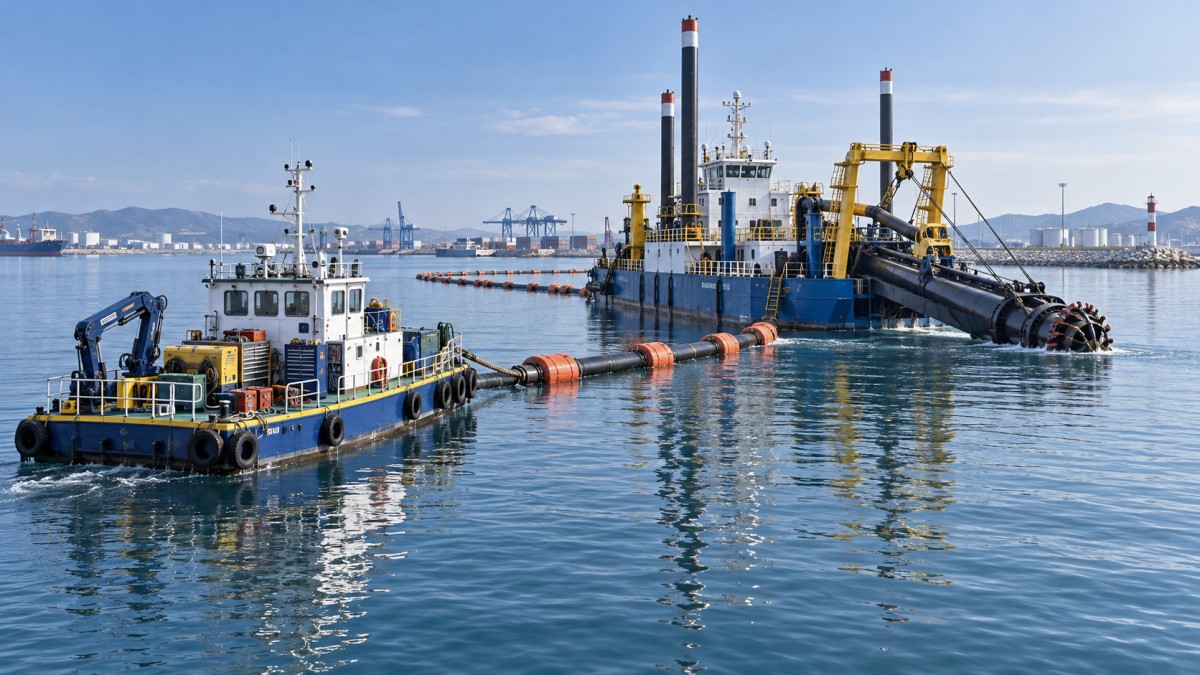
The most practical Multifunctional Work Boat is therefore designed around recurring work rather than around a long list of optional functions. Typical assignments include moving crew and technicians, carrying tools and consumables, towing small barges or floating pipeline sections, assisting with anchor handling, supporting minor maintenance, and providing a stable working platform beside the main dredger. When these tasks occur regularly, combining them on one platform can be more economical than maintaining several lightly used assets.
Where the savings usually appear
Cost savings are not always visible as a single dramatic reduction in the purchase budget. They usually appear across daily operations. One crew can handle a broader set of planned support duties. Fewer vessel handovers mean less waiting at the dredging site. Spare parts and repair personnel can reach the dredger without arranging a separate trip. When properly specified, the work boat can also reduce the number of occasions when a contractor needs to bring in a local vessel at short notice, often at an unfavorable rate.
There is also a maintenance benefit. A smaller, more coherent support fleet is easier to inspect and service than a collection of specialized craft with different engines, deck equipment, electrical systems, and spare-parts requirements. This does not mean one boat eliminates maintenance planning. It means the operator can standardize more of the routine workload around a manageable set of equipment.
Fuel should be evaluated carefully rather than assumed. A work boat that makes combined trips—transporting personnel, carrying supplies, and towing a light load during the same movement—may lower total fuel consumption across the fleet. But an oversized vessel running lightly loaded every day may create the opposite result. The operating profile matters more than the label on the hull.
Match the boat to the dredging spread, not to a brochure
Procurement teams should begin with the main dredger’s working pattern. Consider a river dredging operation using a cutter suction dredger with a long floating discharge line. The support boat may need to move alongside the pipeline, carry welding equipment, assist with line positioning, transport crew, and tow small floating units. A boat selected only for cargo capacity may lack the deck arrangement, towing hardware, maneuverability, or access points needed for these jobs.
For example, a dredging unit such as the YLCSD500 Cutter Suction Dredger is specified for river work with a slurry capacity of 3500 m3/h, dredging depth of 14 m, and discharge distance of 1500 m. Its operating method relies on spuds, steel cables, locating pulleys, and controlled swing cutting. In this type of spread, support requirements are not abstract: crews may need access to the ladder area, spud systems, floating pipeline, pumps, and mooring equipment while the dredger remains productive. The support boat should be evaluated against those actual activities.
A useful procurement discussion should cover the following practical questions:
- How many people, tools, and consumables must be carried on a normal shift?
- What towing load is expected, and is it occasional assistance or a routine duty?
- Will the boat work in shallow water, narrow channels, exposed water, or near floating pipelines?
- Does the deck need space for repair equipment, hoses, anchors, or spare pump components?
- Can the vessel safely approach the dredger and allow personnel transfer under expected site conditions?
- Which tasks genuinely occur every week, rather than only during mobilization or emergencies?
The answers often reveal that a compact and well-equipped platform is more useful than a larger vessel with unused capacity. On the other hand, if a project regularly transports heavy materials or performs demanding towing work, trying to force those duties onto a lightly built multipurpose boat can create downtime and safety concerns. Cost reduction should not be based on overloading one asset.
Avoid the common “one boat does everything” mistake
The phrase multifunctional can encourage unrealistic expectations. A work boat may support piling, dredging, transport, maintenance, and personnel movement, but each function has limits determined by deck layout, propulsion, stability, lifting arrangements, towing equipment, draft, and local operating rules. A vessel that is excellent for carrying mechanics and tools may not be suitable for heavy towing. A boat with a broad working deck may be less practical in a tight river reach.
Decision-makers should also distinguish between planned versatility and improvised versatility. Planned versatility means the boat is configured from the start for the tasks it will perform. Improvised versatility means crews repeatedly adapt unsuitable equipment to fill a gap. The first can reduce operating expenditure; the second often produces repair costs, lost time, and avoidable risk.
This is why experienced dredging equipment suppliers tend to ask about the full operating spread instead of quoting a support vessel in isolation. Qingzhou Yongli Mining And Dredging Machinery Co., Ltd., established in 1997 in Qingzhou, Shandong, works across dredging vessels, mining equipment, installation, commissioning, and project operation support. That broader equipment perspective is relevant because the right work boat depends on how it interacts with cutter suction dredgers, pump barges, transport barges, floating platforms, and site personnel—not simply on its standalone specifications.
Build the investment case around utilization
Before purchasing, map the previous three to six months of support activity if records