











When a Gold Panning Vessel suits remote placer mining sites
When a Gold Panning Vessel Is the Right Fit for a Remote Placer Site
For a remote placer project, the question is rarely just “How much material can the plant process?” A more useful question is whether the operation can keep feeding recoverable material through the plant when water levels change, access roads deteriorate, fuel deliveries are late, and the nearest workshop is several hours away. In those conditions, a Gold Panning Vessel can be a practical production platform rather than simply a floating version of a land-based wash plant.
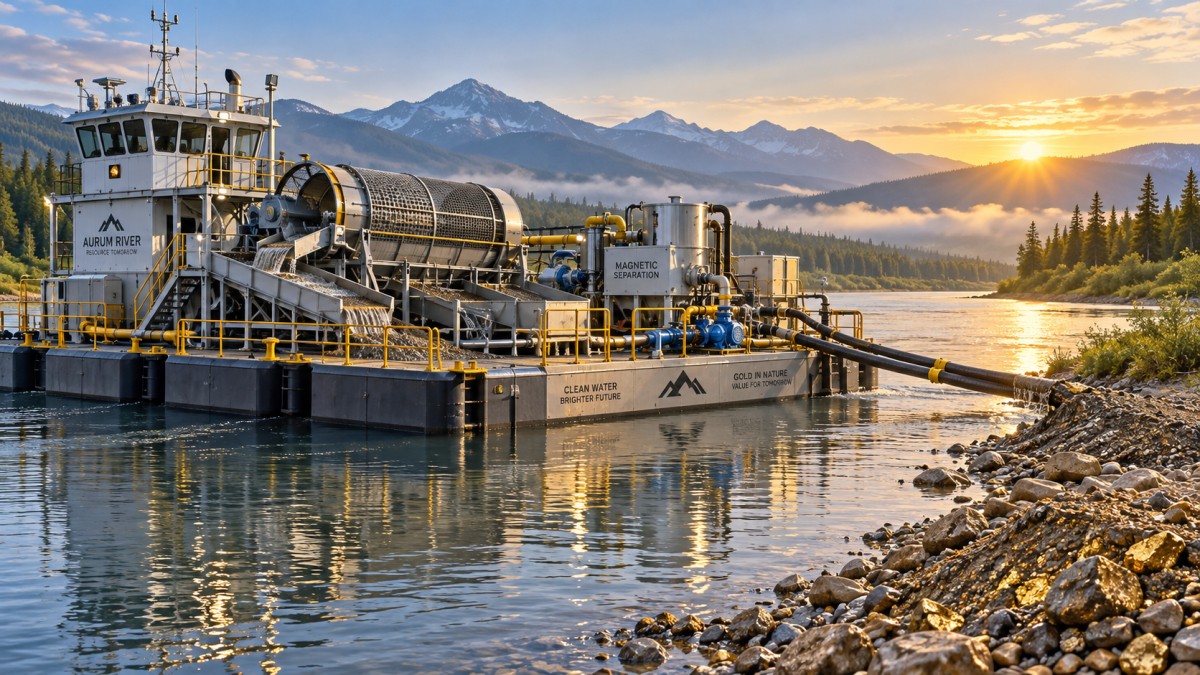
The vessel approach is most suitable where gold-bearing gravel is located in, beside, or immediately beneath a navigable water body and where moving large volumes of ore to shore would add unnecessary handling. It is not automatically the best answer for every alluvial deposit. A shallow stream with unstable access, for example, may favour a smaller modular unit or an amphibious arrangement. But where the deposit, water source, and working conditions align, a floating recovery system can reduce haulage steps and keep the processing flow closer to the excavation face.
The Site Conditions That Favour a Floating Recovery Platform
A Gold Panning Vessel generally makes sense when the mine has enough stable water depth for safe flotation and a deposit that can be excavated or suctioned without excessive rehandling. River terraces, flooded pits, river bends, old dredging cuts, and shallow alluvial basins are common candidates. The key is not just water presence; it is usable water. Seasonal drawdown, flood velocity, sediment movement, anchoring conditions, and access for crew transfer all need to be understood before selecting hull size or processing capacity.
Remote projects also benefit when the vessel can arrive in transportable sections, be assembled near the site, and be commissioned without relying on extensive civil works. Building a permanent pad, settling pond network, power infrastructure, and haul road may be justified for a long-life large mine. It is often hard to justify for a smaller or uncertain placer reserve. A floating platform can shorten the path from mobilization to trial production, provided the logistics plan covers lifting equipment, launch access, fuel storage, spare parts, and safe mooring.
The strongest fit is usually a deposit with reasonably continuous pay gravel. If gold occurs only in narrow, scattered pockets, a large vessel can spend too much time repositioning and processing marginal feed. In that situation, flexibility matters more than headline throughput. A project manager should ask how quickly the vessel can shift its working radius, adjust feed rate, and change screen or recovery settings as the material changes.
Where Vessel Selection Often Goes Wrong
A common mistake is choosing capacity from a production target alone. A 100 TPH plant is not necessarily productive if the excavation side can only deliver intermittent feed, the water intake clogs with debris, or the gold circuit is overwhelmed by clay and black sand. Remote mining equipment has to work as a system: excavation, slurry transport, screening, washing, concentration, tailings discharge, power, and maintenance access must be balanced.
Another mistake is treating hull stability as a detail to be solved later. Trommels, pumps, generators, magnetic separators, fuel tanks, and operator walkways all affect weight distribution. An improperly balanced layout creates more than an inconvenience; vibration, uneven loading, and difficult maintenance access can gradually undermine availability. The equipment layout should allow crew members to inspect pumps, remove screen panels, clear blockages, and service recovery units without working in unsafe positions over water.
Material characterization deserves the same attention. A vessel designed for clean, loose gravel may perform poorly in sticky red clay or iron-rich alluvium. Clay balls can carry fine gold through the circuit, while magnetite and other heavy magnetic minerals can blind recovery carpets, burden jigs, or overload centrifugal concentrators. These are feed problems, not merely operator problems.
Match the Recovery Circuit to the Actual Feed
Before finalizing a Gold Panning Vessel, review representative material from different parts of the deposit, not only the most promising sample. Pay attention to clay content, maximum stone size, fine-gold distribution, black-sand proportion, and whether valuable heavy minerals are present alongside gold. Field testing and practical washability observations may reveal that more scrubbing time or more careful classification is needed than the initial concept assumed.
For black-sand alluvial ground, iron-rich laterite, or tailings re-mining, a magnetic separation stage can protect the gold recovery circuit. A solution such as the Gold Washing Plant with Iron Separator combines clay washing, screening, and high-intensity magnetic separation so magnetic iron minerals can be removed before or during concentration. Its stated iron-removal capability can reach 95%+ under appropriate feed conditions, but this should be verified against the project material rather than assumed from a brochure figure.
That arrangement is especially relevant when magnetite, ilmenite, or iron sand is not simply waste but a possible byproduct. Even then, the process must be configured carefully. The objective is to remove magnetic interference without allowing fine gold to report to the iron concentrate. Non-magnetic construction around the separator, adequate wash water, and a clear cleaning procedure are practical details that make a difference in the field.
Mobility Is Useful Only If It Is Planned
Remote operations are frequently described as “mobile,” but mobility has several meanings. A vessel may be towable on water, transportable by truck in modules, or capable of moving short distances within a mining cut. These are not the same requirement. A project with poor roads may need container-friendly modules. A changing river channel may need a shallow-draft hull and straightforward anchoring. A site with limited lifting capacity may need components sized around locally available equipment.
Fuel and wear parts should be considered during design, not after commissioning. Pumps, impellers, screen media, hoses, bearings, belts, and recovery surfaces are consumables in abrasive placer service. Keeping a sensible stock at site is usually less expensive than losing production while waiting for a part to arrive. Operators also need a realistic maintenance routine. A sophisticated vessel without trained people to monitor slurry density, screen loading, pump pressure, and recovery losses can become an expensive floating bottleneck.
This is where an equipment supplier’s project capability matters. Qingzhou Yongli Mining And Dredging Machinery Co., Ltd., established in 1997, works across dredging vessels, floating production platforms, gold and diamond dredgers, land-based washing plants, installation, commissioning, project operation, and personnel allocation. For remote work, the useful value is not just the machine list. It is the ability to discuss the handoff between vessel design, mineral processing, site installation, and the people expected to run the system.
A Practical Decision Check Before Mobilization
A floating plant is worth deeper evaluation when the deposit can be fed directly from water, the working water level is reasonably predictable, and the project can support fuel, crew, spares, and safe mooring. It becomes less attractive when the ore must be hauled a long distance to the vessel, water is too shallow or too variable, or the deposit requires extensive dry-ground stripping before processing can begin.
Before placing an order, define the expected feed range rather than one ideal feed rate; identify the largest likely stone and the worst clay zone; map seasonal water conditions; and agree on how tailings, fuel, maintenance, and emergency access will be managed. If those answers point toward a floating workflow, a Gold Panning Vessel can give a remote placer project a compact and adaptable operating base. If they do not, forcing a vessel into the wrong site usually costs more than choosing a simpler land-based or amphibious solution from the start.